Why Choose OpenShift Training and Certification Over Kubernetes

Opting for OpenShift training and certification offers significant advantages for your career in container orchestration and cloud-native development:

  • Comprehensive Features: Built-in CI/CD pipelines, advanced security, and a user-friendly web console simplify deployment and management.

  • Ease of Use: Streamlined installation and an intuitive interface make it accessible for all skill levels.

  • Enhanced Security: Stricter default security policies provide higher security out of the box.

  • Integrated Ecosystem: Includes networking solutions like Open vSwitch and automation tools like Jenkins.

  • Enterprise Support: Offers 24/7 technical assistance and a 9-year support lifecycle.

  • Hybrid Cloud Ready: Excels in hybrid and multi-cloud environments, ensuring seamless deployment across infrastructures.

Top 20 Companies Using OpenShift Instead of Kubernetes

Red Hat OpenShift is a leading enterprise Kubernetes solution, and many top companies across various industries have adopted it due to its comprehensive features, enhanced security, and ease of use. Here are twenty notable companies using OpenShift:

Deutsche Bank : Financial services provider leveraging OpenShift for digital transformation.

UPS : Global logistics and package delivery company using OpenShift for scalable operations.

Boeing : Aerospace giant implementing OpenShift for advanced aerospace applications.

Lockheed Martin : Defense contractor utilizing OpenShift for secure and efficient operations.

OCBC Bank : Major banking institution in Asia using OpenShift for financial services.

Activate Interactive Pte Ltd : Technology solutions provider adopting OpenShift for innovative projects.

ANZ Bank : Leading bank in Australia and New Zealand using OpenShift for agile banking solutions.

Banco Santander : International banking group employing OpenShift for financial services.

Cathay Pacific : Major airline using OpenShift for operational efficiency.

GE (General Electric) : Diversified industrial giant leveraging OpenShift for various applications.

Lufthansa Technik : Aviation maintenance company using OpenShift for its digital platform.

Macquarie Bank : Australian bank adopting OpenShift for digital banking infrastructure.

Porsche Informatik : Automotive IT service provider using OpenShift for digital transformation.

X by Orange : B2B digital services provider utilizing OpenShift for a multicloud strategy.

Infosys : Global consulting and IT services company using OpenShift for enterprise solutions.

Fujitsu Ltd : Japanese multinational IT equipment and services company.

Panasonic Corp : Global electronics company employing OpenShift for scalable operations.

eBay Inc. : Major e-commerce platform using OpenShift for its online marketplace.

BP : Energy giant adopting OpenShift for various digital solutions.

Emirates NBD : Leading banking group in the Middle East using OpenShift for financial services.

Why OpenShift Certification
is a Game-Changer for Your Career

High Demand and Growing Market

  • Rising Demand: Over 16,000 companies, including nearly 50% of the top Fortune 100, use OpenShift.

  • Market Growth: The container management market is projected to grow significantly, increasing demand for OpenShift skills.

Competitive Advantage

  • Top Skills: OpenShift professionals are highly sought after for their expertise in containerized applications.

  • Higher Salaries: Certified professionals often earn higher salaries due to their specialized skills.

Career Advancement

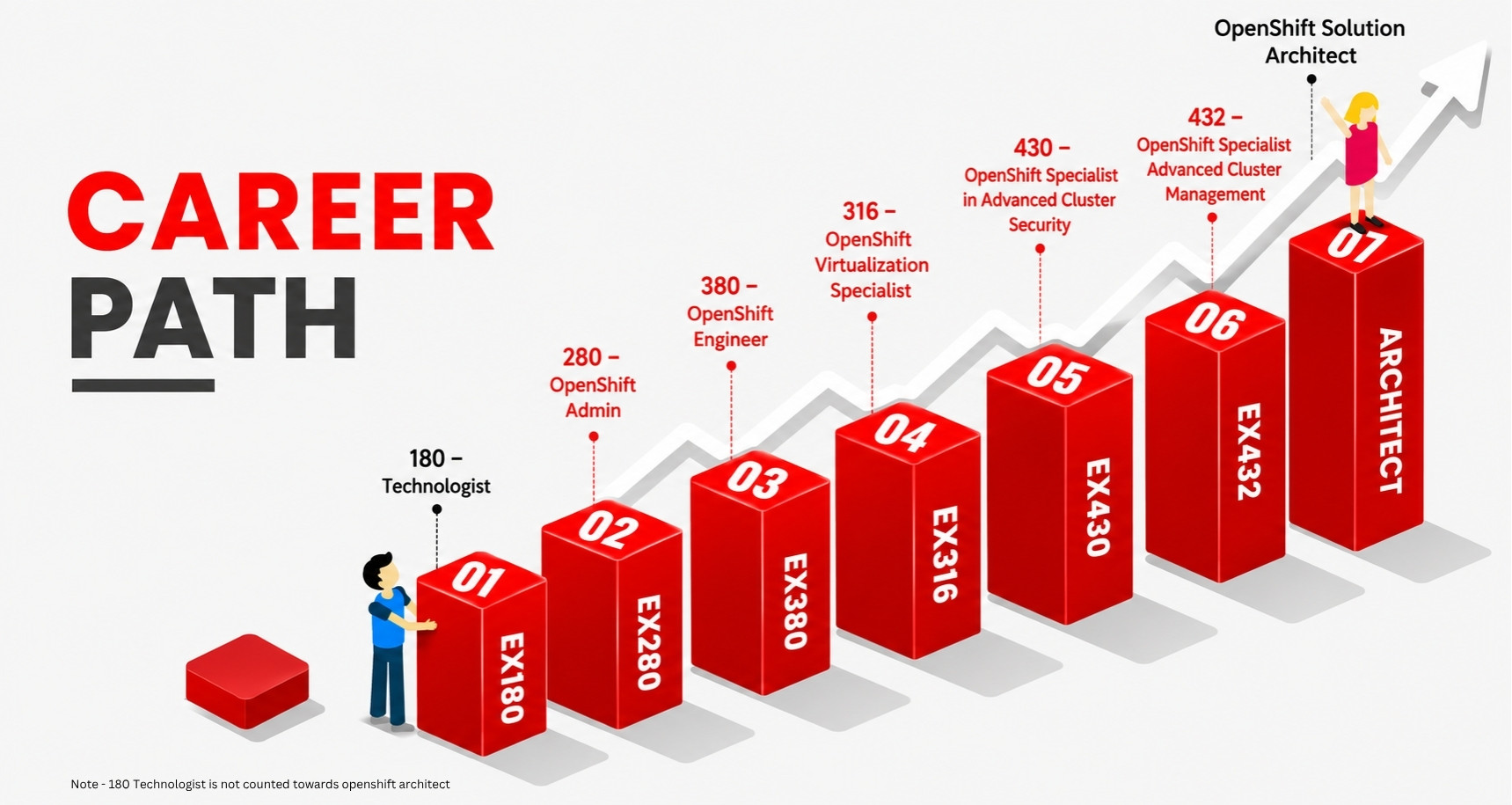
  • Certifications Matter: Red Hat OpenShift certifications (EX280, EX288, EX480) open doors to advanced DevOps roles.

  • Enterprise Preference: Preferred for its robust security and compliance features.

Industry Trends

  • DevOps Integration: Integrated CI/CD tools make OpenShift central to modern DevOps practices.

  • Hybrid Cloud Ready: Operates seamlessly across on-premises, public cloud, and hybrid environments.

Expert Insight on OpenShift Career

What you Will Get in This Course

Training By RedHat Certified Instructor

Exam Preparation With 1 Retake Free

Cloud Based Lab with Zero Downtime & 24x7 Accessible From Anywhere

Official Ebook

Practice Test with Lab

Course Completion Certificate by RedHat

Job Assistance

Meet Your Trainers

Kunal Sir

Kunal Parihar

Corporate Trainer & DevOps Consultant | AWS | Azure | Terraform | Linux | RHCSA | Training Engineers for Real Industry Roles
6+ Years of Experience

Jyoti Gautam

OpenShift Engineer | Corporate Trainer
6+ Years of Experience

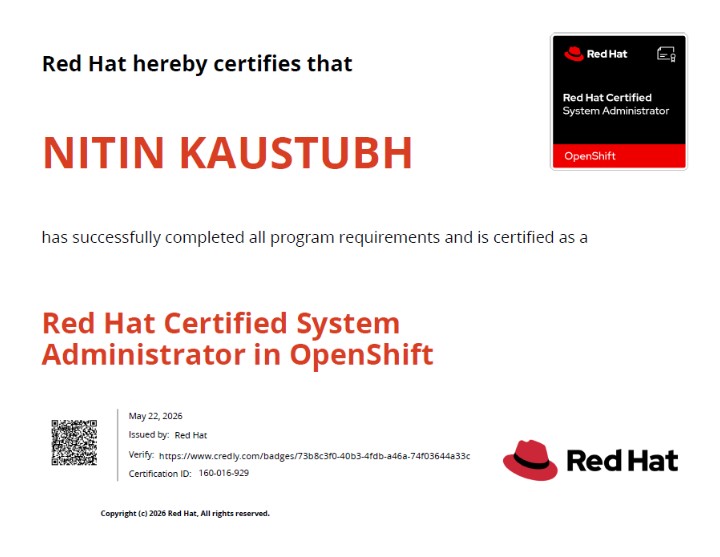
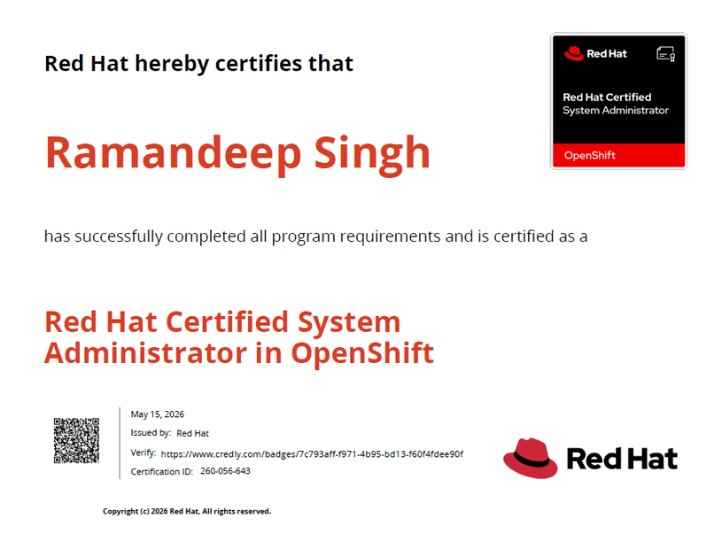
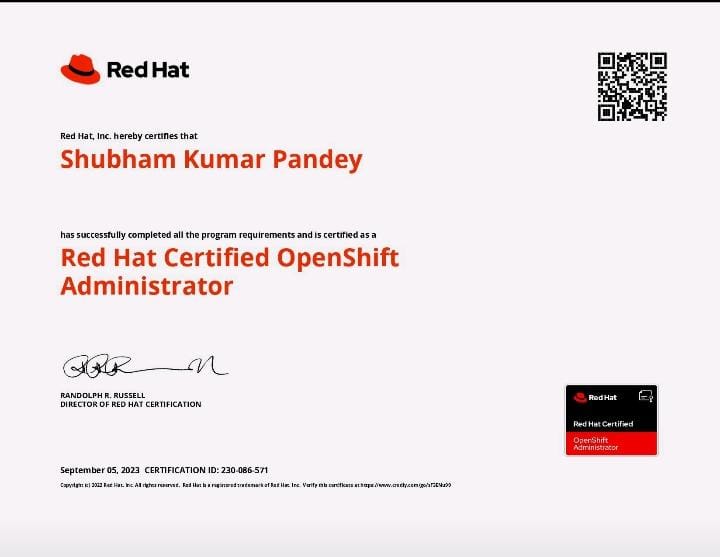
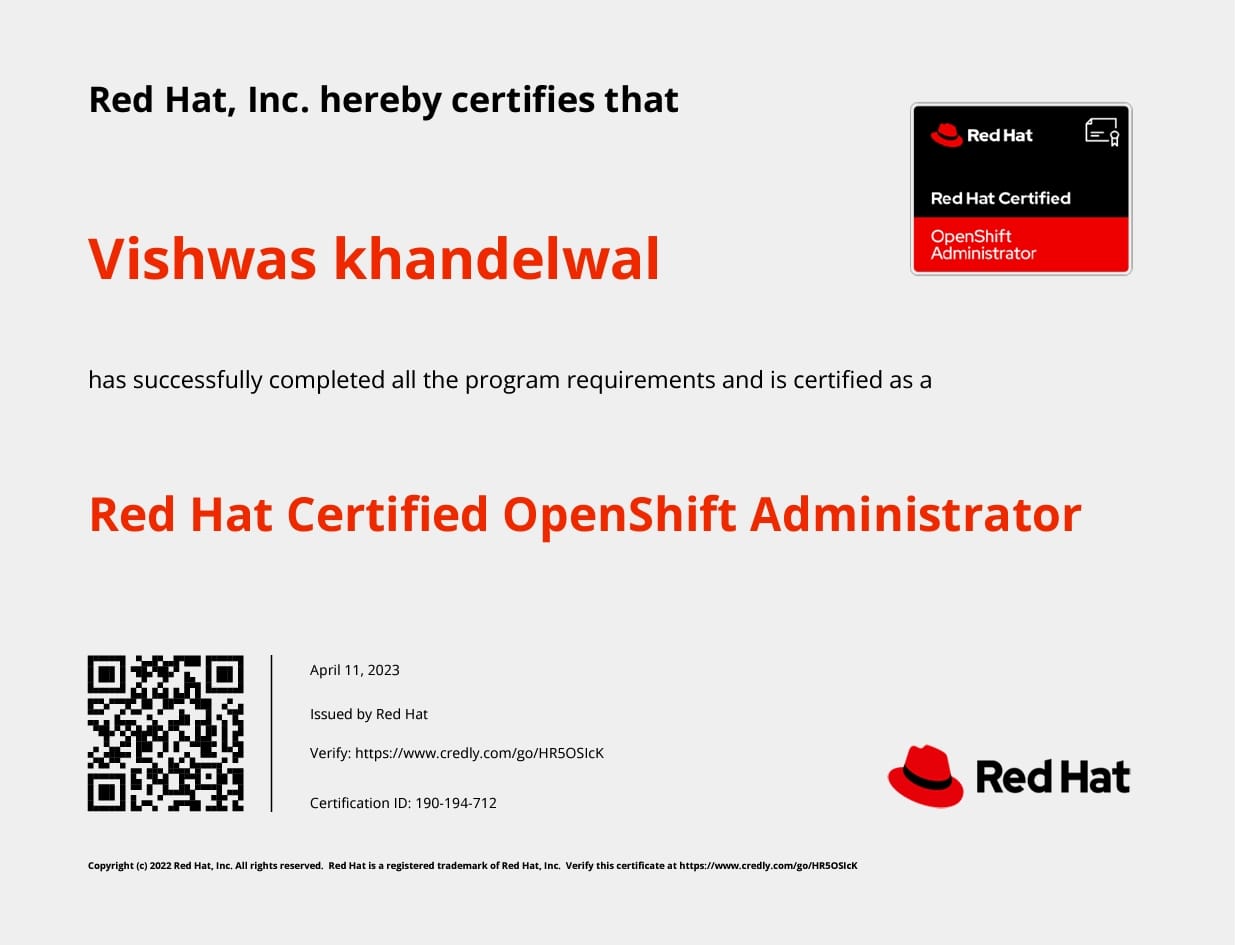
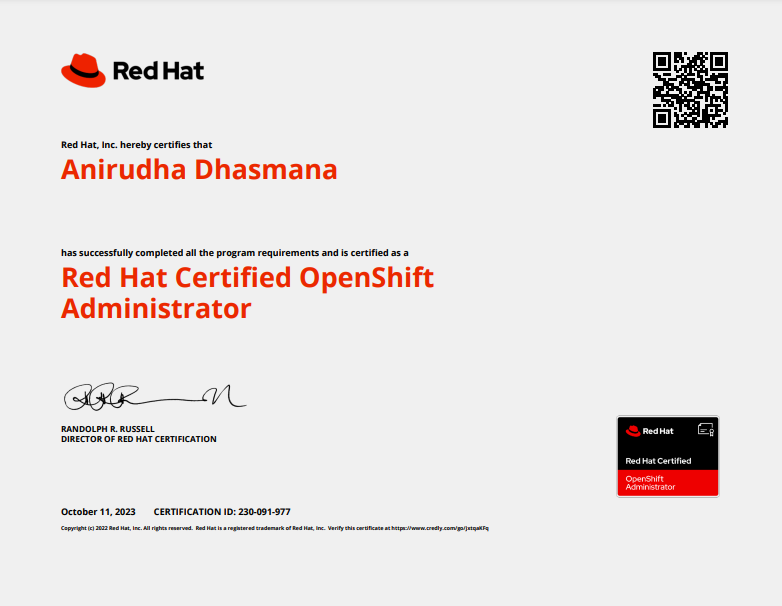
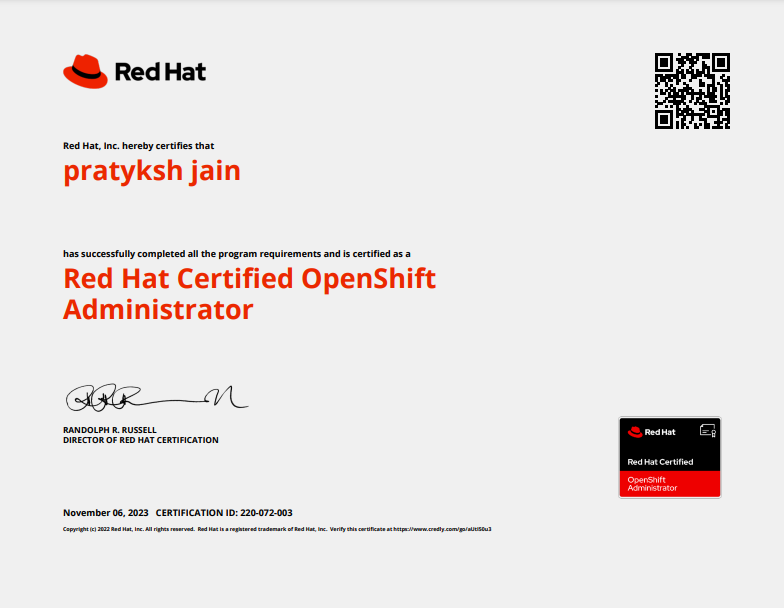
Our Certified Candidates

Course Content For Every Module

Introduction to Kubernetes and OpenShift

  • Identify the main Kubernetes cluster services and OpenShift platform services
  • Monitor Kubernetes and OpenShift services from the web console

Kubernetes and OpenShift Command-Line Interfaces and APIs

  • Access an OpenShift cluster from the command line
  • Query Kubernetes API resources
  • Assess the health of a Kubernetes and OpenShift cluster

Run Applications as Containers and Pods

  • Run containerized applications as unmanaged Kubernetes pods
  • Troubleshoot containerized applications and pods

Deploy Managed and Networked Applications on Kubernetes

  • Deploy applications on Kubernetes and OpenShift
  • Expose applications for network access inside the cluster
  • Expose applications for external network access

Manage Storage for Application Configuration and Data

  • Externalize application configurations using Kubernetes resources
  • Provision storage volumes for persistent application data
  • Manage persistent data files for applications

Configure Applications for Reliability

  • Configure applications for high availability
  • Implement resilience and fault tolerance in Kubernetes
  • Ensure reliable application operations

Manage Application Updates

  • Perform reproducible application updates
  • Manage configuration updates
  • Execute application rollbacks when required

Overview of OpenShift Container Platform:-

  • Describing OpenShift Container Platform It’s Feature
  • Kubernetes v/s OpenShift
  • Overview of OpenShift Architecture
  • Overview of Cluster Operators

Cluster Management:-

  • Explanation of Cluster Installation Methods
  • Deploying Application on OpenShift
  • Packaged Application Using Helm Chart
  • Declarative Resource Management

Authentication Authorization:-

  • Configuring Identity Providers
  • Describing Permission RBAC
  • Applying Permission with RBAC

Exposing non-HTTP/SNI Application:-

  • Load Balancer Services
  • Overview of Multus Secondary

Network Security:-

  • Protect External traffic with TLS
  • Configure network policies
  • Protect internal traffic with TLS

Enable Developer Self-Service:-

  • Project and Cluster Quotas
  • Per-Project Resource Constraints: Limit Ranges
  • The Project Template and the Self-Provisioner Role

Managing Kubernetes Operators:-

  • Kubernetes Operators Operator Lifecycle Manager
  • Installing and Managing Operator using web console
  • Installing and Managing Operator using CLI

Application Security:-

  • Control Application Permissions with Security Context Constraints
  • Allow Application Access to Kubernetes APIs
  • Cluster and Node Maintenance with Kubernetes Cron Jobs

OpenShift Updates:-

  • The Cluster Update Process
  • Update Operators with the OLM

Authentication and Identity Management

  • The OpenShift OAuth Server and Identity Providers
  • LDAP Authentication and Group Synchronization
  • OIDC Authentication and Group Claims
  • Token and Client Certificate Authentication with kubeconfig Files

Backup, Restore, and Migration of Applications with OADP

  • Export and Import Application Data and Settings
  • OADP Operator Deployment and Features
  • Backup and Restore with OADP

Cluster Partitioning

  • Node Pools
  • Node Configuration with the Machine Configuration Operator
  • Node Configuration with Special Purpose Operators

Pod Scheduling

  • Pod Scheduling Concepts
  • Node Selectors and Taints
  • High Availability with Affinity Rules and Pod Disruption Budgets

OpenShift GitOps

  • GitOps for Kubernetes
  • GitOps for Cluster Administration
  • GitOps for Application Management

OpenShift Monitoring

  • Cluster Monitoring
  • Alerts and Notifications

Red Hat OpenShift Virtualization :-

  • Describing OpenShift Virtualization
  • Explanation of Underlying Kubernetes Architecture
  • Deploying the OpenShift Virtualization Operator

Running and Accessing Virtual Machines:-

  • Virtual Machine Resources
  • Creating and Accessing Virtual Machines
  • Inspecting and Monitoring Virtual Machines

Configure Kubernetes Networking for Virtual Machines:-

  • Kubernetes Networking Objects
  • Configure External Access to Virtual Machines
  • Configure External Access with Load Balancer Services

Connecting Virtual Machines to External Networks:-

  • About Multus
  • Configuring Multihomed Nodes and Virtual Machines

Configuring Kubernetes Storage for Virtual Machines:-

  • Attaching Persistent Storage to Virtual Machines
  • Attaching and Accessing Disks on Virtual Machines
  • Connecting Virtual Machines to External Storage

Managing Virtual Machine Templates:-

  • Using Virtual Machine Templates
  • Creating Custom Templates for Virtual Machines

Advanced Virtual Machine Management:-

  • Migrating Virtual Machines from Compatible Hypervisors
  • Manage Virtual Machine Snapshots
  • Cloning Virtual Machines
  • Performing Virtual Machine Live Migrations
  • Node Maintenance and OpenShift Virtualization Updates

Configuring Kubernetes High Availability for Virtual Machines:-

  • Virtual Machine Load Balancing with Kubernetes Networking Resources
  • Configuring Health Probes for Virtual Machines
  • Surviving Node Failure with Virtual Machines

Installing Red Hat Advanced Cluster Security for Kubernetes

  • Describe the RHACS architecture and its core components
  • Implement Red Hat Advanced Cluster Security for Kubernetes
  • Follow recommended installation best practices
  • Troubleshoot common RHACS installation issues

Vulnerability Management with Red Hat Advanced Cluster Security for Kubernetes

  • Interpret vulnerability scanning results
  • Generate and analyze vulnerability reports
  • Evaluate risks and security exposures
  • Prioritize remediation actions based on risk assessment

Policy Management with Red Hat Advanced Cluster Security for Kubernetes

  • Implement security policies using RHACS
  • Enforce policies across all stages of deployment
  • Secure CI/CD pipelines with policy enforcement
  • Protect the software supply chain through automated controls

Network Segmentation with Red Hat Advanced Cluster Security for Kubernetes

  • Identify security gaps in network policies
  • Analyze network communications using Network Graph
  • Generate network segmentation policies
  • Apply network policies within CI/CD pipelines

Manage Compliance with Industry Standards with Red Hat Advanced Cluster Security for Kubernetes

  • Run built-in compliance scans
  • Install and configure the Compliance Operator
  • Assess cluster compliance against security standards
  • Generate compliance reports and audit evidence

Integrate External Components with Red Hat Advanced Cluster Security for Kubernetes

  • Integrate centralized alert notification systems
  • Configure backup and restore capabilities
  • Implement identity and access management integrations
  • Extend RHACS functionality through external services

Installing Red Hat Advanced Cluster Management for Kubernetes

  • Describe the RHACM architecture and its core components
  • Implement Red Hat Advanced Cluster Management for Kubernetes
  • Follow recommended practices for RHACM installation
  • Configure and validate RHACM deployment

Managing Clusters by Using Red Hat Advanced Cluster Management for Kubernetes

  • Import and manage clusters using the RHACM web console
  • Configure user access and permissions for managed clusters
  • Monitor cluster health and status
  • Troubleshoot common cluster import and management issues

Deploying and Managing Policies for Multiple Clusters with Red Hat Advanced Cluster Management for Kubernetes

  • Deploy governance policies across multiple clusters
  • Manage policy compliance using RHACM
  • Monitor policy enforcement and compliance status
  • Implement governance best practices in multicluster environments

Enabling and Customizing the Red Hat Advanced Cluster Management for Kubernetes Observability Stack

  • Enable RHACM observability components
  • Monitor performance and availability of managed clusters
  • Customize observability dashboards and metrics
  • Troubleshoot cluster performance and monitoring issues

Managing the Multicluster Application Lifecycle by Using GitOps Practices and Red Hat Advanced Cluster Management for Kubernetes

  • Implement GitOps workflows for multicluster environments
  • Deploy applications across multiple clusters using RHACM
  • Manage application lifecycle and updates through GitOps
  • Monitor and troubleshoot application deployments

Managing Virtual Machines for Multiple Clusters with Red Hat Advanced Cluster Management for Kubernetes

  • Deploy virtual machines across multiple clusters
  • Manage VM lifecycle using RHACM and GitOps practices
  • Configure and monitor virtual machine workloads
  • Implement multicluster VM management strategies

Duration: 32 Hrs

An introduction to developing and deploying AI/ML applications on Red Hat OpenShift AI.

Developing and Deploying AI/ML Applications on Red Hat OpenShift AI (AI267) provides students with the fundamental knowledge about using RedHat OpenShift for developing and deploying AI/ML applications.This course helps students build core skills for using Red Hat OpenShift AI to train, develop and deploy machine learning models through hands-on experience.

This course is based on RedHat OpenShift®4.14,and RedHat OpenShift AI 2.8.


OpenShift AI Certification:-

Certification Preparation > 4 Hours

  • OpenShift AI certification equips you with the skills to efficiently manage and deploy AI workloads, optimizing resources and improving scalability in real-world applications.
  • Gain expertise in integrating AI solutions with containerized environments, enhancing your ability to streamline machine learning workflows and automate complex processes.

Recommended training

  • Experience with Git is required
  • Experience in Python development is required
  • Experience in RedHat OpenShift is required,or completion of The RedHat OpenShift DeveloperII:Building and Deploying Cloud-native Applications (DO288)course
  • Basic experience in the AI, data science, and machine learning fields is recommended

Audience

AI Engineer | MLOps Engineer | Generative AI Engineer |LLM Engineer |AI Platform Engineer| MLOps Engineers | OpenShift Administrators | DevOps Engineers supporting AI workloads |Cloud Engineers managing AI infrastructure | Platform Engineers | Infrastructure Engineers working with Kubernetes/OpenShift


Course Outline

  • Introduction to RedHat OpenShift AI

    Identify the main features of RedHat OpenShift AI,and describe the architecture and components of Red Hat OpenShift AI.

  • Data Science Projects

    Organize code and configuration by using data science projects, workbenches, and data connections

  • JupyterNotebooks

    Use Jupyter note books to execute and test code interactively

  • Installing RedHat OpenShift AI

    Installing RedHat OpenShift AI by using the web console and the CLI, and managing Red Hat OpenShift AI components

  • Managing Users and Resources

    Managing RedHat OpenShift AI users, and resource allocation for Workbenches

  • Custom Note book Images

    Creating custom notebook images,and importing a custom notebook through the Red Hat OpenShift AI dashboard

  • Introduction to Machine Learning

    Describe basic machine learning concepts,different types of machine learning, and machine learning workflows

  • Training Models

    Train models by using default and custom workbenches

  • Enhancing Model Training with RHOAI

    Use RHOAI to apply best practices in machine learning and data science

  • Introduction to Model Serving

    Describe the concepts and components required to export, share and serve trained machine learning models

  • Model Serving in RedHat OpenShift AI

    Serve trained machine learning models with OpenShift AI

  • CustomModelServers

    Deploy and serve machine learning models by using custom model serving runtimes

  • Introduction to Data Science Pipelines

    Create,run,manage,and troubleshoot data science pipelines

  • Elyra Pipelines

    Creating a DataScience Pipeline with Elyra

  • Kube Flow Pipelines

    Creating a DataScience Pipeline with KubeFlow SDK